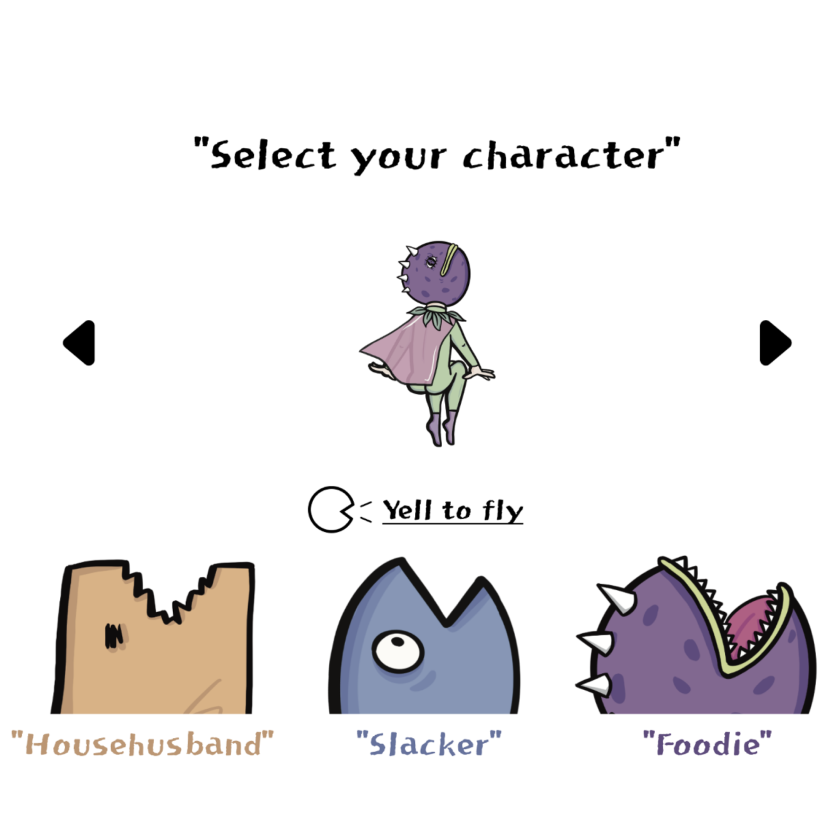
These experiments investigate structured randomness: how rule-based systems, constraints, and seeds can produce variation without sacrificing coherence, readability, or aesthetic identity.
01 Designing systems rather than static assets
02 Shaping randomness through intentional constraints
03 Building generative pipelines that remain controllable
04 Creating computationally driven worldbuilding tools

Emergent multi-agent motion from simple local rules. Inspired by the swirling paper birds in Spirited Away, this system generates complex global motion from minimal local interactions, fully parameterized and tunable at runtime.
What It Demonstrates:
Emergent Behavior Global order arising from purely local rules
Multi-Agent Coordination Cohesion, alignment, and separation dynamics
Obstacle-Aware Navigation Real-time environmental responsiveness
Perturbation Recovery Stability maintained after external disruption
Motion Trace Visualization Dynamic trajectory rendering for behavioral clarity
Technical Highlights:
Boids AlgorithmCohesion · Alignment · SeparationWeighted Obstacle AvoidanceReal-time Parameter TuningDirection-facing OrientationProcedural Trail RenderingFade Control

A stylized arctic navigation environment where terrain and ecosystem elements are generated dynamically as the player moves forward. The system maintains world continuity through chunk-based streaming while applying spatial rules to place environmental objects.
What It Demonstrates
Procedural World Streaming Forward-loading chunk generation as player advances
Infinite Horizon Architecture Seamless expansion of navigable space
Noise-based Terrain Shaping Continuous, natural-feeling height variation
Rule-driven Ecosystem Spawning Controlled placement of ice floes, wildlife
Navigation-Aware Design Performance-conscious environmental layout
Technical Highlights:
Perlin / Noise Terrain GenerationChunk Alignment SystemCamera-driven StreamingSpatial Spawn ConstraintsAnti-clustering LogicLightweight Stylized Rendering

A deterministic procedural vehicle system where each integer seed produces a unique, fully reproducible vehicle identity. Bodies are constructed using Bézier patch geometry, assembled from modular components, balancing structural consistency with open-ended stylistic variation.
What It Demonstrates
Deterministic Generation Same seed always produces the same vehicle
Modular Assembly Architecture Component-based construction pipeline
Constraint-based Variation Controlled randomness within structural rules
Procedural Mesh Construction Runtime geometry built from scratch
Physics-ready Integration Colliders and rigidbodies auto-configured
Technical Highlights:
Bézier Patch Body ConstructionFactory-pattern Component GenWheels · Lights · Intakes · RoofProbability-controlled FeaturesSeed Management SystemRuntime AnimationWheel Rotation · Wipers

Copyright © 2026 Freya Huang. All rights reserved.